Future optical products will span faster communication links, compact instruments, precision sensing, microwave photonics, and multi-wavelength sources. Their requirements will not converge on one universal modulator.
They expect a family of intensity, phase, IQ, and comb functions, each optimized for a specific balance of bandwidth, voltage, loss, integration, and environmental stability. A strong electro-optic response, compact waveguides, and high-speed electrodes make the thin-film platform appropriate for several device classes.
The technology can be delivered as chips or packaged fiber devices. This flexibility lets developers choose where to place coupling, control, and assembly responsibility, although every additional boundary needs clear interfaces and qualification.
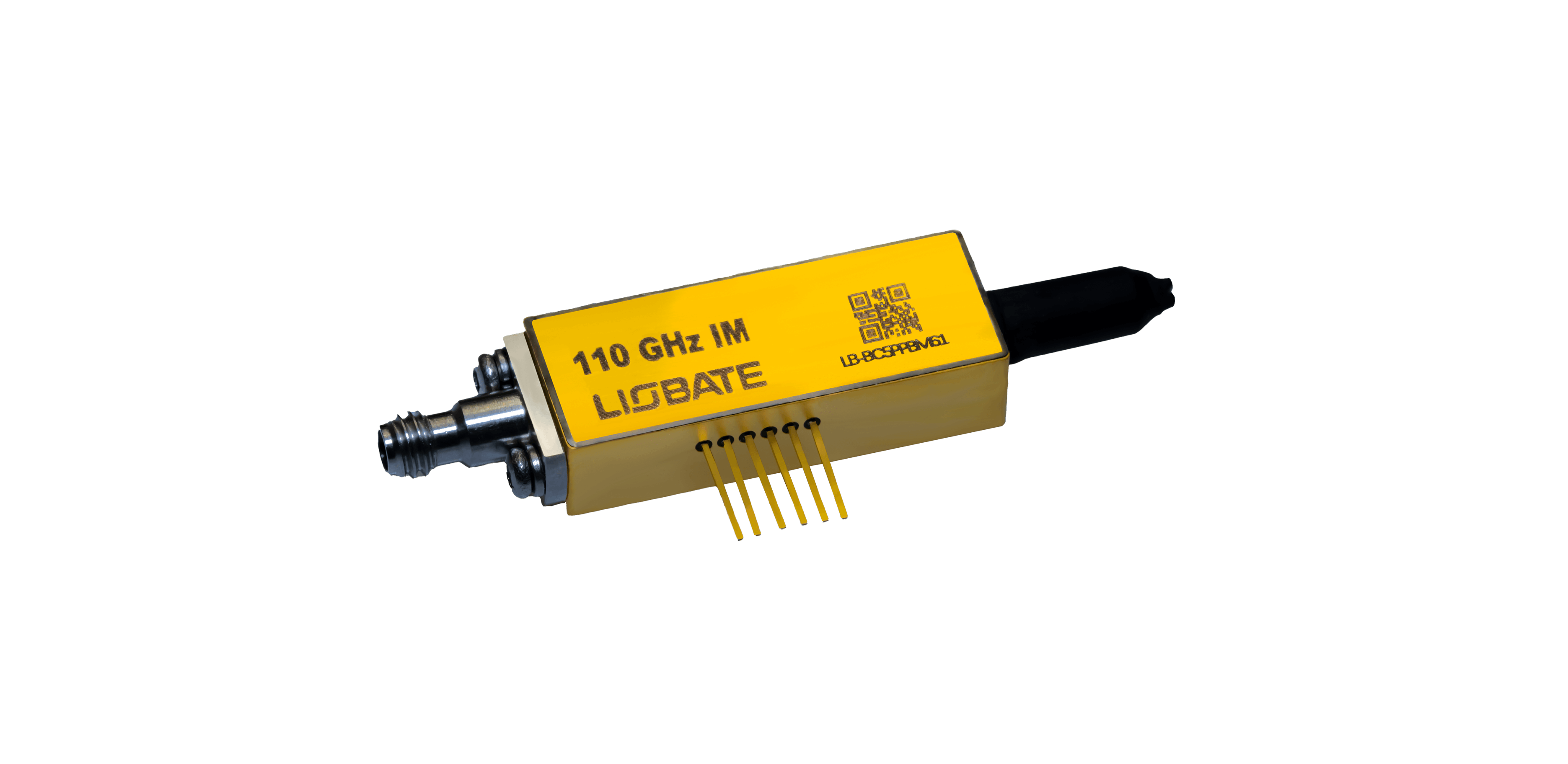
Current TFLN Devices range from compact 40 GHz intensity modulation to a 67/110 GHz option, 40 GHz phase and IQ products, an integrated-source configuration, and a 25 GHz comb device. They use this breadth to map possible product roadmaps while reserving final decisions for measured system performance and production readiness.
Next-Generation Devices Need Flexible Modulation Functions
A thin-film lithium niobate modulator can create intensity variation for data or pulse control, direct phase shifts for sensing and microwave photonics, or nested IQ signals for coherent transmission. Comb architectures generate multiple optical lines from one laser.
They begin with the required optical operation because choosing a platform before the function often leads to unnecessary complexity. Compact assemblies can be supported by TFLN devices, but functional integration should remove meaningful interfaces. An integrated low-noise source may reduce alignment and sourcing tasks, whereas a separate laser may provide wavelength flexibility or easier replacement.
Multi-function circuits can lower part count while increasing calibration and supplier dependence. They compare the consequences over the product lifecycle. Next-generation systems may also require software-defined operating modes.
A coherent transmitter can trade modulation order against reach, and a measurement source can alter drive frequency or waveform. Hardware must provide enough bandwidth and stability for these modes, while controls need documented ranges and diagnostics. Flexibility is useful when transitions between modes are repeatable and supportable.
Published Performance Must Be Matched to the Intended Architecture
For high-rate intensity control, the 67/110 GHz product lists insertion loss below 4.5 dB and half-wave voltage below 3 V. A thin-film lithium niobate modulator with this range may serve demanding communication or test waveforms. They validate response in the delivered package, because connectors, cables, board launches, and mounting can reduce usable bandwidth.
Phase and IQ products at 40 GHz address different operations. The phase unit is below 3.5 dB insertion loss and 3.5 V half-wave voltage, while the IQ unit is below 6.5 dB and 3.5 V. TFLN devices should be compared according to the functions integrated, not by treating higher loss in a more complex circuit as an automatic disadvantage.
The comb product uses 25 GHz RF bandwidth, voltage below 2.5 V, and loss below 9 dB with configurable levels. For spectroscopy or synthesis, they additionally require line spacing, flatness, phase noise, power per line, and long-term drift. A general modulator data sheet does not replace application-specific spectral measurements and calibration planning.
Roadmap Decisions Should Include Manufacturing and Lifecycle Evidence
Roadmap qualification starts with a common library of interfaces and test methods. They document optical reference planes, RF impedance, drive conventions, connector options, environmental limits, and measurement uncertainty.
For a thin film lithium niobate modulator family, common documentation helps engineering teams compare generations without confusing genuine device progress with changes in test setup.
TFLN devices intended for volume products need statistical process evidence, capacity planning, and controlled package partnerships. They examine yield at wafer, package, and final-test stages and identify the bottleneck that governs cost and lead time.
Process-change notification should cover materials and assembly details that may affect high-frequency response, loss, or long-term stability. Lifecycle support includes replacement compatibility, calibration records, failure analysis, and technical response after launch. Optical products may remain deployed longer than the electronics used to test them.
They therefore preserve reference procedures and data formats that can survive equipment upgrades. Supplier cooperation during field investigation is a measurable part of program risk. Design ownership must remain clear as functions become more integrated.
Chip suppliers, package houses, electronics partners, and module makers should know who controls each interface and who investigates a failure. Written ownership and data-sharing rules prevent a complex issue from circulating among vendors without a timely technical decision.
Next-generation optical devices will benefit from modulators that combine fast response with manageable voltage, optical loss, and integration effort. The thin-film platform offers several ways to reach that balance, yet no specification removes the need for co-design.
Electrical, optical, mechanical, thermal, and software teams must work from the same operating assumptions. They recommend roadmap gates based on evidence: component characterization, packaged prototype, system demonstrator, multi-lot qualification, and controlled production release.
Each gate should answer a different risk question and produce data that the next stage can use. This sequence prevents early laboratory success from being mistaken for full commercial readiness.
A thin-film lithium-niobate roadmap works better when reusable platform elements are separated from functions requiring dedicated qualification. Staged projects using Liobate devices can build evidence for communication, sensing, and instrumentation without forcing one release model onto every application.