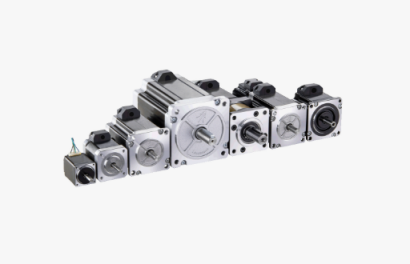
In the realm of precision motion control, two dominant technologies are the stepper motor and the servo motor. While both are used to convert electrical pulses into precise mechanical rotation, their underlying principles, performance characteristics, and ideal applications differ significantly. For engineers and machine designers, selecting the appropriate technology is a critical decision that impacts cost, complexity, and machine capability. A stepper motor operates on an open-loop principle, moving in discrete steps, while a servo motor functions within a closed-loop system for continuous position correction. Each has distinct advantages, and companies like Leadshine provide comprehensive solutions for both, including advanced hybrid stepper motor families like the CM series and high-performance servo systems, enabling customers to choose the optimal technology for their specific needs.
Core Operating Principle: Open-Loop vs. Closed-Loop Control
The most fundamental difference lies in the control architecture. A standard stepper motor system is inherently open-loop. The contro
ller sends a train of digital pulses to the drive, with each pulse commanding the motor to move one precise angular increment, or “step.” The system assumes the motor follows every command perfectly, with no mechanism to verify actual shaft position. This makes it simple and cost-effective. In contrast, a servo motor system is fundamentally closed-loop. It consists of the motor, a high-resolution encoder (or resolver) attached to the shaft, and a sophisticated drive. The drive continuously compares the commanded position from the controller with the actual position reported by the encoder. If there is any deviation (following error), the drive automatically adjusts the motor’s current to correct it. This feedback loop ensures the motor reaches and maintains its target position with high accuracy, regardless of load disturbances. Leadshine’s product lines clearly reflect this division, offering traditional open-loop stepper drives (EM series) and advanced closed-loop stepper or full servo systems, providing flexibility based on the need for positional verification.
Performance Characteristics: Torque, Speed, and Precision
The different control methods lead to divergent performance profiles. A stepper motor, particularly a hybrid stepper motor like those in Leadshine’s CM series, excels at providing high holding torque at zero and low speeds. Its torque output, however, decreases significantly as speed increases, which can limit its use in high-speed, high-torque applications. Its precision is defined by its fixed step angle (e.g., 1.8° per full step), which can be subdivided into microsteps for smoother motion, but it risks step loss under excessive load. A servo motor, conversely, is designed for dynamic performance. It can deliver high torque across a wide speed range, from very low RPM to several thousand, and can provide bursts of peak torque (often 200-300% of rated) for rapid acceleration. Its precision is typically higher and more consistent, governed by the resolution of its encoder and the control loop’s ability to correct errors in real-time, making it superior for applications requiring continuous path following or high-speed accuracy.
System Complexity, Cost, and Ease of Use
From a system design perspective, a basic stepper motor setup is generally simpler and more economical. It requires a less expensive drive and does not need a feedback device, reducing component count and wiring complexity. This makes it easier to commission and troubleshoot. Advanced stepper motion control systems from Leadshine, such as those using the CM Series hybrid stepper motor, add features like microstepping for smoothness but retain this inherent simplicity. A servo system is more complex and typically carries a higher initial cost. It requires the motor-integrated encoder, a more sophisticated drive capable of running the control algorithm, and often more involved tuning (setting PID gains) to achieve optimal performance without oscillation. While this increases upfront cost and engineering time, the investment is justified for applications demanding the highest performance. Leadshine addresses servo complexity with drives featuring “ease of use” and auto-tuning algorithms, helping to mitigate this traditional disadvantage.
Typical Application Domains
The choice between technologies is often dictated by the application’s primary demands. Stepper motor systems are the ideal choice for applications requiring excellent low-speed torque, precise open-loop positioning, and cost-sensitive, high-volume designs. They dominate in:
·Point-to-Point Positioning: 3D printers, CNC router auxiliary axes (tool changers, doors), linear actuators, and microscope stages.
·Speed Control: Conveyors, metering pumps, and scanning devices where maintaining a constant speed is key.
·Holding Applications: Where the motor must hold a position firmly against a force, leveraging the stepper motor’s inherent detent torque.
The hybrid stepper motor is particularly favored in these areas for its balance of power and precision. Leadshine highlights applications for its stepper products in packaging, textile, and general automation. Servo motors are the preferred solution for high-dynamic, high-precision, and high-speed applications, such as:
·Continuous Path Control: Robotic arms, CNC machining centers performing contouring, and multi-axis coordinated systems.
·High-Speed Cycling: Pick-and-place machines, high-speed packaging lines, and flying cut-off systems.
·Applications Requiring Variable Load Handling: Winding, web tension control, and press fitting where torque must be precisely regulated.
In conclusion, the choice between a stepper motor and a servo motor is not a matter of one being universally better, but of selecting the right tool for the job. The stepper motor, especially the versatile hybrid stepper motor, offers simplicity, excellent low-speed torque, and cost-effectiveness for open-loop positioning tasks. The servo motor delivers superior dynamic performance, high-speed capability, and closed-loop accuracy for the most demanding applications. By offering robust and innovative solutions in both categories—from the high-torque CM Series stepper motor to its high-performance servo families—Leadshine equips designers with the necessary tools to make this critical choice. Understanding these fundamental differences allows engineers to optimize machine design for performance, reliability, and total cost of ownership.