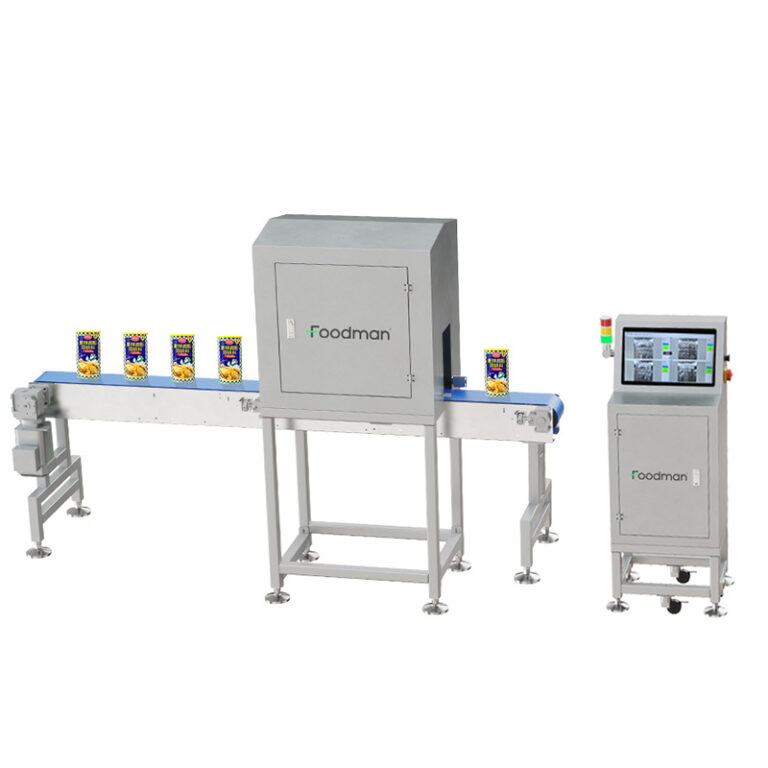
Food manufacturers often face a practical choice between human visual checking and automated inspection. Manual inspection can work for simple, low-volume tasks, but consistency becomes harder to maintain as production speed, product variety, and inspection requirements increase.
A vision inspection machine changes the workflow by using industrial cameras, image processing, and automated decisions to examine products continuously. The real question is not whether machines can replace every human check, but which inspection tasks benefit most from automation.
The Real Difference Is Inspection Consistency
Manual inspection depends on people observing products and deciding whether each item meets a defined visual standard. Results can vary with attention, fatigue, lighting, product speed, and the experience of the operator. Even a well-trained team may struggle to maintain identical judgment across a long production shift.
Automated vision takes a different route. Multiple cameras capture product images from different angles, while image-processing algorithms analyze characteristics and identify defined defects. The referenced system uses multi-angle industrial cameras and AI-based deep learning to create recognition models for inspection and sorting.
Consistency becomes especially important when inspection involves repetitive checks. A machine can apply the same programmed criteria to products moving continuously through an inspection zone. Human operators can then focus on exceptions, process control, and other tasks that require judgment rather than repeatedly checking every package.
What Manual Inspection Can and Cannot Control
Manual inspection remains useful where production volumes are limited, product changes are frequent, or defects require contextual judgment. An experienced operator can notice unusual conditions and respond to problems that may not yet have been incorporated into an inspection model.
The difficulty appears when every product requires the same detailed visual examination. Checking labels, codes, seals, dents, scratches, and cracks one package at a time places a heavy burden on personnel. Human inspection also makes complete image-based traceability difficult unless additional systems are introduced.
Speed creates another constraint. A worker must physically see and interpret each item as it passes. Increasing conveyor speed therefore reduces the available observation time. Automation can perform image acquisition and analysis while products remain in continuous motion.
How Automated Vision Changes the Inspection Workflow
A vision inspection machine turns visual quality control into a defined sequence: capture, analyze, decide, and execute. Cameras positioned around the inspection area capture product images as items pass through. AI-powered analysis then compares the observed characteristics against the inspection model.
The system described by the reference can inspect sealing, labeling, coding, and appearance defects. Examples include missing or incorrect labels, barcode and 1D/2D code issues, scratches, dents, cracks, and seal conditions.
Detection is only one part of the workflow. Once a defective product is identified, the system can automatically remove it and alert operators. Real-time inspection results and visual reports can also support traceability, giving quality teams a clearer record than a purely manual process.
Which Defects Are Better Suited to Machine Vision
Machine vision is particularly valuable when the inspection target has a visible, repeatable appearance. Packaging defects are a strong example. A camera can examine whether a label is present, whether printed information is visible, and whether a package shows defined physical damage.
Seal inspection is another practical use. Packaging systems can examine bottles, cans, and bags for seal-related conditions such as alignment and flatness. Detecting these conditions online can help prevent defective packages from moving further through production.
Code verification also benefits from automated inspection. Printed codes can be checked for presence and visible defects, while barcodes and 1D/2D codes can be detected as part of the inspection process. Such repetitive checks are well suited to automated image analysis because the criteria can be applied consistently across large production runs.
When Automation Delivers the Stronger Production Case
The business case for automation becomes clearer when inspection is frequent, repetitive, and connected to a moving production line. High-volume operations cannot easily increase manual inspection coverage without adding personnel or reducing inspection speed.
A vision inspection machine can also reduce dependence on subjective decisions. Automated rejection means products identified as defective can be removed immediately rather than waiting for an operator to intervene. This creates a more direct connection between detection and corrective action.
Integration is another factor. The referenced system is designed to connect with existing production lines and supports food, beverage, pharmaceutical, and cosmetic applications. Its HMI provides real-time inspection information, visual reporting, and image management for traceability.
Model development should still be approached carefully. Foodman Vision states that its AI algorithm can create an initial model from 1,000 samples and develop a complete data model within one week. Actual deployment should still be validated using representative products and real production conditions rather than relying only on general model-development claims.
Making Vision Inspection Part of the Line
The strongest approach is to assign each inspection task to the method best suited to it. Manual inspection can remain valuable for unusual cases, process investigation, and tasks requiring human interpretation. Automated vision is better positioned for repetitive visual checks that demand consistent execution at production speed.
Foodman views automation as part of the broader production workflow rather than an isolated replacement for workers. A successful implementation starts by defining the defects, inspection position, product presentation, line speed, and required response to rejected items.
For manufacturers evaluating a vision inspection machine, the decision should therefore begin with the inspection problem. If operators repeatedly check the same visual characteristics, automation can improve consistency and create a measurable inspection record. If the task requires flexible judgment, human involvement may remain essential.
Foodman can position vision inspection within a production strategy where automated checking handles repeatable visual tasks while personnel concentrate on higher-value decisions. That division can make quality control more consistent without treating automation and human expertise as competing approaches.