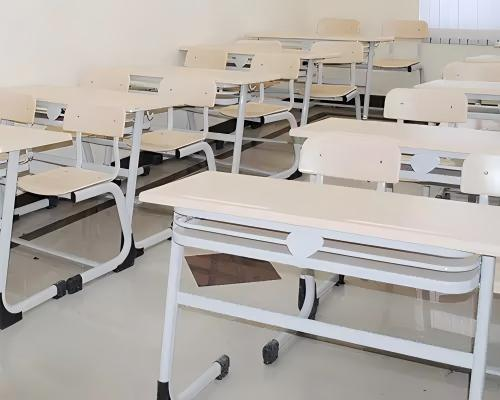
Buying school furniture directly from a Chinese factory can give schools, contractors, and distributors more control over product selection, customization, and project costs. However, without a local dealer, the buyer must coordinate supplier checks, specifications, payment, shipping, customs clearance, and after-sales support. The key is to define responsibilities before production begins.
Everpretty school furniture, a B2B supplier serving educational institutions and overseas project buyers. The company combines its own manufacturing operations with OEM and ODM services, preliminary design, project coordination, delivery, installation, and after-order support. Its range includes classroom, kindergarten, library, laboratory, dormitory, and canteen furniture.
Define the Project Before Contacting a Factory
Prepare a furniture schedule before requesting quotations. List each space, product type, quantity, preferred material, dimensions, colour, and any required accessories. For example, a classroom package may include student desks and chairs, teacher furniture, storage cabinets, and writing boards. A library may need bookshelves, reading tables, study carrels, and seating.
Attach floor plans, room measurements, reference photos, and local safety or durability requirements. For multi-campus projects, separate quantities by delivery location.
Avoid sending only a reference photo and asking for a price. Similar-looking desks can differ in frame thickness, board material, edge treatment, finish, and packing method. Ask suppliers to identify the proposed model and provide a written specification for every line item.
Verify the Chinese Factory Before Paying
A professional website is not proof that a supplier owns a factory or can manufacture the products being quoted. Ask for the registered company name, business licence, factory address, export experience, and a live video tour of the production areas. Ask to see processes relevant to the order, from fabrication to packing.
Check that the company receiving payment is the same legal entity named in the contract and invoice. If a trading company or export agent is involved, clarify its role and identify the factory responsible for production and quality control. For large orders, consider an independent audit.
An established educational furniture manufacturer should be able to explain its product range, production arrangements, customization limits, and quality checks. Verify these claims through documents, samples, and direct communication.
Compare Quotations on the Same Basis
Send the same product schedule to each shortlisted supplier. Ask for unit prices, tooling or customization charges, sample costs, packaging details, production lead time, payment milestones, and quotation validity. Check whether prices include export packing, inland transport, freight, insurance, duties, and final-site delivery.
Trade terms matter. Under EXW(Ex Works), the buyer generally takes responsibility for collection and onward transport from the named place. FOB(Free On Board) and CIF(Cost, Insurance and Freight) allocate certain shipping responsibilities differently, while DDP(Delivered Duty Paid) places broader delivery and import-clearance obligations on the seller, subject to the named destination and applicable local rules. Do not compare quotations using different Incoterms as if they cover the same service.
If you lack a freight forwarder, request alternative delivery quotations. Confirm who acts as importer of record, who pays duties and taxes, and whether the quoted delivery includes unloading and movement into school buildings. DDP wording alone does not guarantee that every site-specific service is included.
Approve Samples and Specifications in Writing
Before mass production, request a physical sample or a pre-production sample for customized items. Check dimensions, stability, surface finish, welds, edges, colour, hardware, and ease of assembly. For large orders, retain an approved reference sample.
The contract should include model numbers, drawings, materials, dimensions, colour references, tolerances, packaging standards, inspection criteria, and the approved sample. Define remedies for non-conforming goods. For school projects, also confirm whether local regulations require particular fire, chemical-emission, load, or safety tests. Ask for test reports that match the actual product and material, not a generic certificate.
Control Payment, Production, and Shipment
Avoid paying the full order value upfront unless there is a specific, well-understood reason and suitable protection. Agree on a deposit and balance-payment structure tied to clear milestones. The balance may be linked to a successful pre-shipment inspection and the agreed shipping documents. Use traceable business payments to the contracted entity.
Request a production schedule with dates for material preparation, fabrication, finishing, assembly, inspection, and loading. Request progress photos at agreed stages. For substantial orders, appoint an independent inspector to check quantity, workmanship, dimensions, labels, and packing before shipment. Review loading records and shipping documents before final payment.
Plan Customs, Delivery, and After-Sales Support
Direct factory purchasing does not remove the buyer’s import obligations. Check the destination country’s import rules, product standards, tariff classification, duties, taxes, and required documents with a customs broker. Check the invoice, packing list, bill of lading, certificates, and consignee details before dispatch.
Also plan for site access, unloading equipment, storage, installation, and delivery sequencing. School sites may have restricted receiving hours or fixed project deadlines. Agree in advance who handles damaged goods, missing parts, replacement shipments, installation questions, and warranty claims. Set response times and evidence requirements in the contract.
Buying Direct Requires Clear Responsibilities
Buying directly from China does not mean buyers have to manage every stage alone. The right factory should be able to explain how its products are made, how project requirements are handled, and what support is available after delivery.
As a B2B educational furniture manufacturer with its own production base, Everpretty offers schools and contractors a direct alternative to local dealers. Its 79,100-square-metre facility and six production lines support OEM/ODM development, space design, and installation for overseas education projects. International logistics covers sea, air, and land freight, including door-to-door delivery and export flat-pack packaging. ISO, SGS, TUV, and BV certifications, give buyers a documented quality baseline. Schools and contractors can explore the furniture range and discuss whether its manufacturing, project, and logistics services fit their procurement needs..